 Traceability
Understanding PM2.5 and PM10: The Hidden Dangers in Air Pollution
Particulate matter is one of the most dangerous forms of air pollution — small enough to reach deep into your lungs and bloodstream. Here’s what PM2.5 and PM10 are, where they come from, and how to protect yourself.
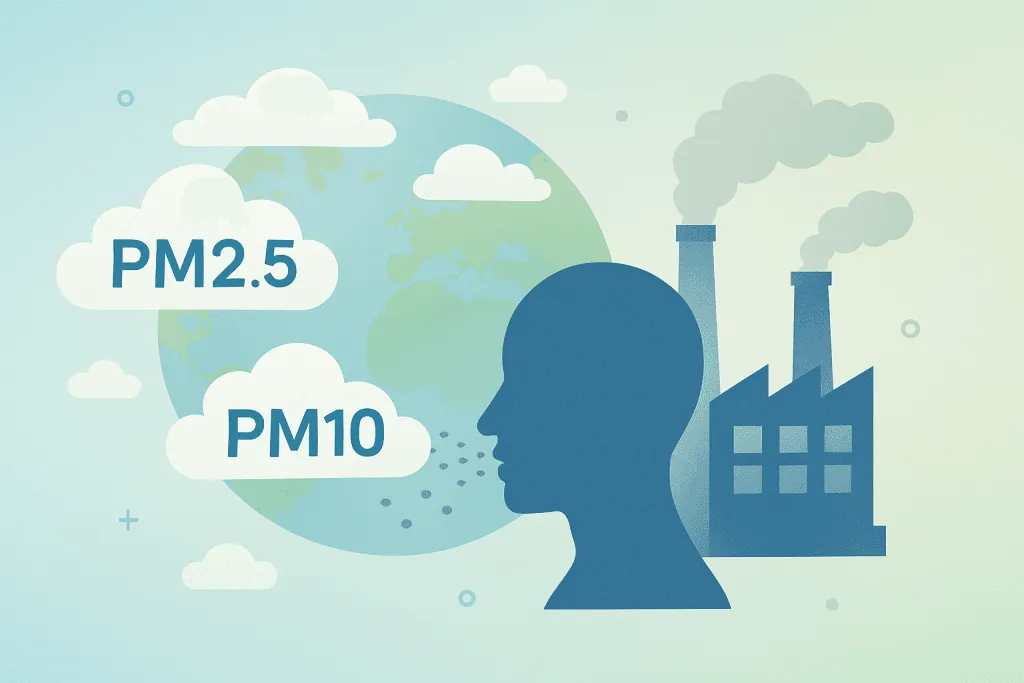
Air pollution is a major environmental health threat, and particulate matter (PM) plays a central role. Two of the most harmful pollutants — PM2.5 and PM10 — are dangerous precisely because they can penetrate deep into the respiratory system.
What are PM2.5 and PM10?
- PM10 consists of particles with a diameter of 10 micrometres or smaller — including dust, pollen and mould spores.
- PM2.5 contains even finer particles, 2.5 micrometres or smaller, such as combustion by-products and industrial emissions. To put that in perspective, PM2.5 is about 30 times smaller than the width of a human hair.
Because they are so fine, PM2.5 particles can travel past the body’s natural defences, lodging deep in the lungs and even entering the bloodstream.
Sources of PM2.5 and PM10
- Natural sources: dust storms, wildfires, volcanic eruptions, sea spray and pollen.
- Human-caused sources: vehicle emissions, industrial activities, fossil-fuel burning and everyday household activities.
Health impacts
- Short-term: irritation of the eyes, nose and throat, coughing, and worsening of existing respiratory conditions.
- Long-term: increased risk of lung cancer and heart disease, chronic respiratory illness, premature death, and impacts on children’s brain development.
How to reduce exposure
- Outdoors: check the Air Quality Index (AQI), wear an N95 mask on high-pollution days, use public transport, and support clean-energy policies.
- Indoors: use HEPA air purifiers, keep windows closed when outdoor air is poor, avoid indoor burning and smoking, and maintain cleanliness.
The role of air quality monitoring
Governments monitor particulate matter through ground stations and satellite imaging, with data available through platforms such as AirVisual and AQICN. For industries, accredited monitoring is the first step toward managing emissions — Aura’s NABL-accredited air quality and stack emission testing measures PM2.5, PM10 and more against CPCB and GPCB norms.
The bottom line
PM2.5 and PM10 are invisible but deadly. Cleaner air needs both systemic action and individual responsibility — and it starts with understanding, and measuring, what’s in the air we breathe.
Need to measure particulate matter at your site or boundary? Aura’s NABL lab monitors ambient and stack air to CPCB norms. Explore air testing.
Keep reading
More insights
Traceability Compliance
 Service