 Traceability
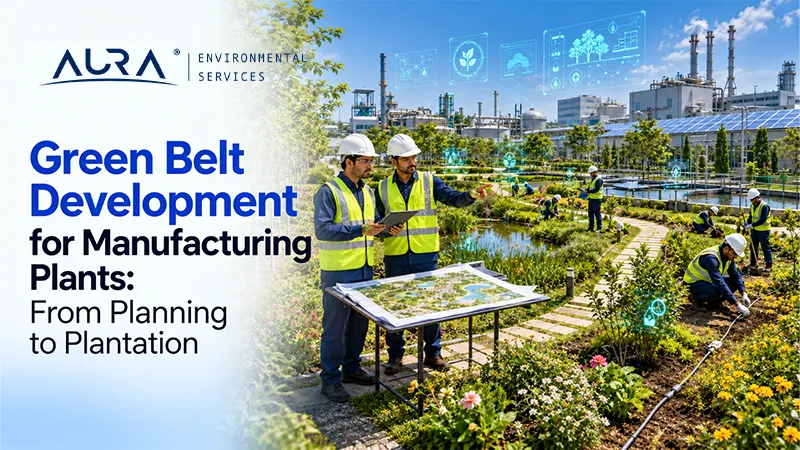
Green Belt Development for Manufacturing Plants: From Planning to Plantation
Key Takeaways
- A Beam Clamp Rigging Roller enhances load handling safety by providing controlled and smooth movement during lifting operations.
- Using a Beam Clamp Rigging Roller reduces manual handling, minimizing physical strain and improving workplace safety.
- Reliable equipment like a Beam Clamp Rigging Roller ensures better load control, making precise positioning easier for operators.
- Implementing a Beam Clamp Rigging Roller can significantly increase productivity by facilitating faster and more efficient material movement.
- A BEAM CLAMP RIGGING ROLLER enables smooth load movement, minimizing operational risks during heavy lifting tasks.
Aura Environmental Services Pvt. Ltd., a leading provider of green belt development services, helps manufacturing plants transform available land into planned, sustainable green spaces. Effective Green Belt Development in Gujarat involves much more than planting trees around a factory boundary. It requires site assessment, suitable species selection, structured layouts, irrigation planning and long-term maintenance.
For manufacturing facilities, a well-planned green belt can support consent requirements while contributing to better environmental management, biodiversity and responsible use of available land.
Why Manufacturing Plants Need Planned Green Belts
Industrial green belts are planned plantation areas developed around or within manufacturing premises. Their purpose goes beyond improving the appearance of a facility.
Aura's current service information describes green belts as part of industrial environmental planning, with layouts and tree density designed around CPCB norms and applicable consent conditions.
A properly developed green belt can contribute to:
- Creating organised green cover around industrial premises
- Supporting environmental consent conditions
- Improving local biodiversity and habitat
- Incorporating pollution-tolerant vegetation around industrial areas
- Making productive use of designated open land
- Supporting long-term sustainability initiatives
For these outcomes, plantation decisions need to match the actual site rather than following a generic landscaping approach.
Step 1: Assessing the Site Before Plantation
The first stage of Green Belt Development in Gujarat is understanding the manufacturing site itself. Soil conditions, available land, plant layout and environmental requirements can influence how the green belt should be designed.
Aura's process begins with a site survey that considers the site, soil and consent conditions.
A useful initial assessment may consider:
- Available land designated for green cover
- Soil and site conditions
- Existing plantation
- Industrial layout and usable plantation zones
- Applicable consent requirements
- Water availability for irrigation
Good green belt planning starts with the conditions on the ground, not simply with a list of trees.
Step 2: Developing the Green Belt Layout
Once the site has been assessed, the next stage is preparing a practical plantation layout.
Aura states that its green belt plans incorporate tree density, species selection and landscaping while considering CPCB green belt norms and consent conditions.
The layout should identify where vegetation will be established and how plantation can fit around existing industrial infrastructure. Manufacturing facilities may have internal roads, utilities, production buildings, storage areas and operational zones, so plantation planning needs to work with the site's actual use.
A structured plan gives the plant team a clear direction before plantation begins.
Step 3: Selecting Suitable Plant Species
Species selection is one of the most important parts of industrial plantation planning. Trees should not be selected only because they are visually attractive.
For Green Belt Development in Gujarat, Aura prioritises native and pollution-tolerant species suited to local soil and climatic conditions. The company also incorporates biodiversity considerations into plantation planning.
Native species can be particularly valuable because they are adapted to regional environmental conditions. Selecting appropriate species can also make the plantation more practical to maintain over the long term.
The objective is to build a green belt suited to the industrial site rather than create decorative landscaping alone.
Step 4: Planning Plantation and Irrigation
After the design and species selection are finalised, the project moves into implementation.
Aura's current approach includes phased plantation schedules and water-wise irrigation planning as part of its green belt development service.
The implementation process generally moves through four connected stages:
- Assess the site, soil and consent-related requirements.
- Design the green belt layout, species mix and tree density.
- Develop the plantation according to the planned schedule.
- Maintain the green belt as vegetation becomes established.
This structured approach helps manufacturing plants move from planning documents to actual green cover on the site.
Step 5: Building Biodiversity into the Green Belt
A green belt should contribute environmental value beyond the number of trees planted.
Plant diversity and thoughtful landscaping can support local biodiversity while making industrial green areas more resilient. Aura includes biodiversity enhancement within its green belt services and considers planting and design choices that contribute to local habitat.
For manufacturing plants, this means the development plan can consider a suitable mix of vegetation instead of relying on a uniform plantation pattern.
Step 6: Maintaining the Plantation
Planting is not the final stage. Young vegetation requires appropriate care before the green belt becomes properly established.
Maintenance can include irrigation management, plantation care and ongoing attention to the condition of the green area. Aura provides development and maintenance services rather than limiting its work to preparation of the initial design.
For long-term Green Belt Development in Gujarat, maintenance planning is important because the real value of a green belt comes from healthy, established vegetation rather than plantation activity alone.
Why Choose Us
At Aura Environmental Services Pvt. Ltd., we approach industrial green belts as complete development projects rather than standalone plantation activities. We assess site and soil conditions, prepare CPCB-norm green belt layouts, select native and pollution-tolerant species, plan tree density, landscaping and irrigation, and support plantation development and maintenance. Our approach to Green Belt Development in Gujarat helps manufacturing plants create practical green cover aligned with their site conditions, consent requirements, biodiversity objectives and long-term sustainability plans.
Conclusion
Green belt development for a manufacturing plant requires coordinated planning from the first site assessment through plantation and ongoing care. The process should consider available land, soil conditions, consent requirements, species suitability, tree density, irrigation and biodiversity before work begins. A structured approach to Green Belt Development in Gujarat can help industries convert open areas into functional and sustainable green cover that supports environmental responsibilities over the long term. Aura Environmental Services Pvt. Ltd. provides planning, development and maintenance support to help industrial facilities build green belts designed around practical site requirements.
Planning a green belt for your manufacturing plant? Contact Aura Environmental Services Pvt. Ltd. to discuss your site, plantation requirements and green belt development scope.
Call: +91 76219 49043
Or Email: management@auraenv.com
Connect with our team today to plan and develop a sustainable green belt for your industrial facility.
FAQs
Green belt development in Gujarat refers to the planned plantation of trees around or within manufacturing facilities. It involves a thorough site assessment, species selection, and structured layouts to enhance environmental management, biodiversity, and compliance with consent requirements.
Manufacturing plants need green belts to create organized green cover, support environmental consent conditions, improve local biodiversity, and make productive use of available land. A well-planned green belt can significantly contribute to responsible environmental management.
Site assessment for green belt development involves evaluating soil conditions, available land, existing vegetation, and the layout of the manufacturing facility. This initial analysis ensures that the green belt plan is tailored to the specific site requirements and environmental regulations.
For green belt development in Gujarat, suitable species are typically native and pollution-tolerant. These species are chosen based on their adaptability to local soil and climate conditions, contributing to the green belt's sustainability and ease of maintenance.
After establishing a green belt, ongoing maintenance is crucial for the health of the vegetation. This includes irrigation management, care for the young plants, and continuous monitoring of the green area's condition to ensure the long-term success of the development.
Need to measure particulate matter at your site or boundary? Aura’s NABL lab monitors ambient and stack air to CPCB norms. Explore air testing.
Keep reading
More insights
Traceability Compliance
 Service